
Pastor · Author · Christian Nationalist
Dale Partridge
Pastor of King’s Way Reformed Church, host of American Glory, and a leading voice for the recovery of a Christian America.
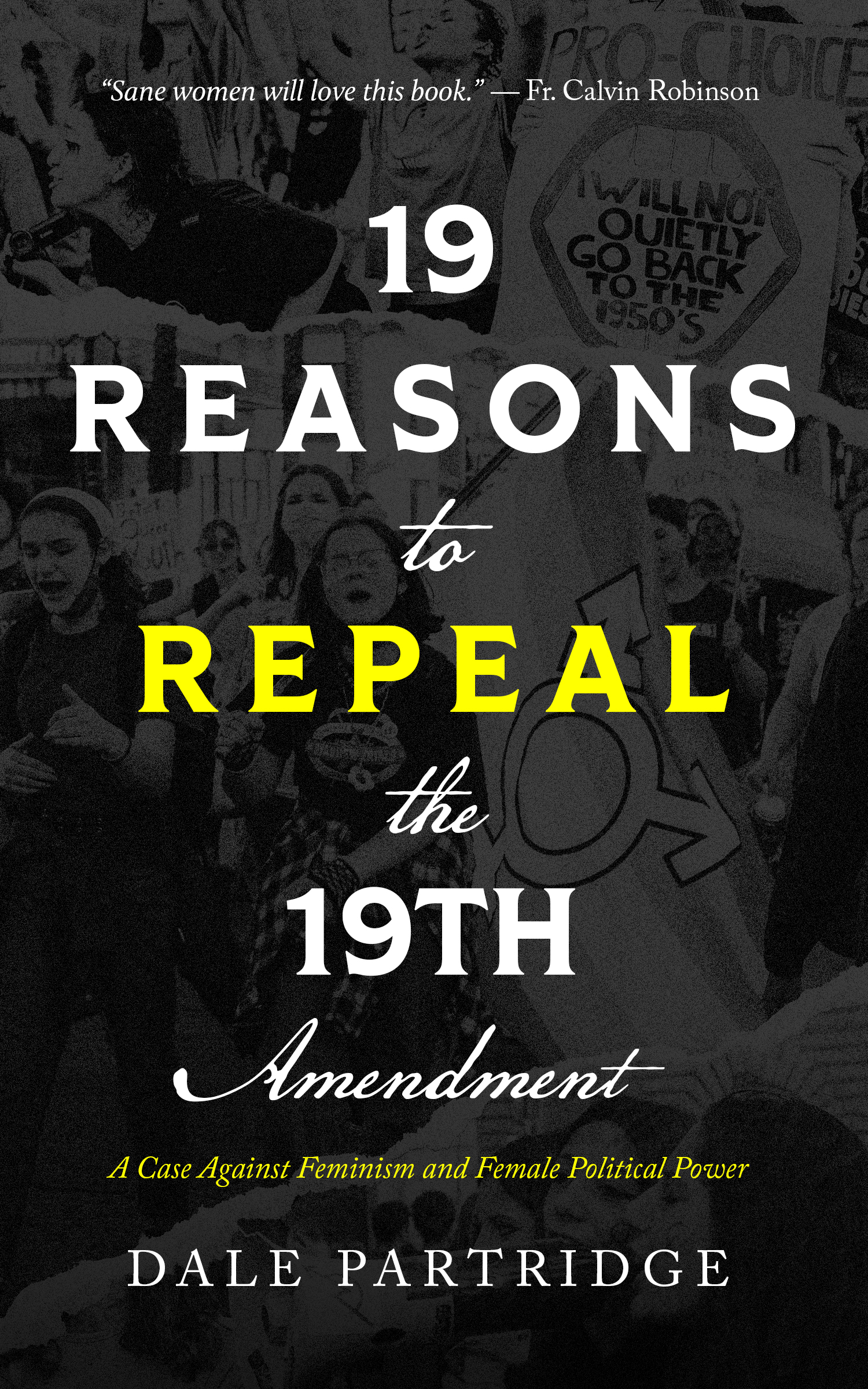
Coming Soon · December 2026
How Female Political Power Subverts God's Order
A Case Against Feminism and Female Political Power
In this provocative and unapologetically biblical work, pastor Dale Partridge makes the case that the 19th Amendment — which granted women the right to vote in 1920 — has been a catastrophic mistake for America and the Church.
Pre-order now
About Dale
A pastor for a nation that has forgotten its King.
Dale Partridge is the senior pastor of King’s Way Reformed Church in Prescott, Arizona, and the president of Relearn.org. A former entrepreneur who left the business world in 2017 to pursue full-time ministry, he holds a Graduate Certificate from Western Seminary. Today, Dale preaches, writes, and speaks extensively on the renewal of the church, the family, and the nation under the lordship of Jesus Christ. As the host of the American Glory podcast, he advocates for Christian Nationalism. He is the author of more than a dozen Christian books, including The Manliness of Christ, A Cover for Glory, The Israel Delusion, and the bestselling children’s book Jesus and My Gender. Dale and his wife, Veronica, reside in Prescott with their four children.
- Senior Pastor, King’s Way Reformed Church
- President, Relearn.org
- Bestselling Author
- Host, American Glory
Education
- Graduate Certificate in Theology Western Seminary, Portland, Oregon
- Graduate Theological Coursework The Master’s Seminary
- Additional Seminary Coursework Systematic & Pastoral Theology
- Biblical Languages Directed study in Greek & Hebrew
Areas of Expertise
Topics Central to Dale’s Work
-
I
Reformed Theology
The doctrines of grace, covenant theology, and the confessional faith of the Reformation.
-
II
Biblical Patriarchy
The God-given headship of fathers in the home, the church, and society.
-
III
Christian Nationalism
The kingship of Christ over nations, and the duty of a Christian people to honor Him in law and life.
-
IV
Feminism & the 19th Amendment
A biblical critique of feminism and its effects on the household and the vote.
-
V
Biblical Foreign Policy & Immigration
How Scripture speaks to borders, nations, war, and the stranger.
-
VI
A Theology of Race & Ethnicity
Nations, peoples, and kinship in the biblical story from Babel to the Great Commission.
Setting the Record Straight
Common Questions About Dale's Positions
Much has been written about Dale—often by people who disagree with him. Here are his actual positions, stated plainly and in his own words.
 Read my story
In the Light
My Story, My Failures, His Grace Get the book
What is my doctrine?
Read my story
In the Light
My Story, My Failures, His Grace Get the book
What is my doctrine?
01 What does Dale believe about men and women?
I believe men and women are equal in dignity and worth before God, but distinct by His design. I hold to biblical patriarchy: the loving headship of husbands and fathers, who are called to lead, protect, and provide for their households. According to Scripture, men are the heads of their homes and serve as their families' representatives before God, the church, and the state.
God's order extends beyond differing roles. Men and women are distinct in their very nature, not merely in their responsibilities. Masculinity and femininity are fixed biological realities established by God, not interchangeable identities constructed by culture. Nature determines identity, and identity informs activity. In other words, what we are by God's design should shape how we live, what we pursue, and the responsibilities we embrace.
I have a wonderful wife and daughter, and my desire is for them to flourish as women—feminine, honored, protected, and living in accordance with the purpose for which God created them. Biblical patriarchy does not diminish women; properly practiced, it recognizes their indispensable place in God's design for the family and society.
Furthermore, the survival of a nation depends upon the survival of the home, and the home cannot flourish without women at its center (Titus 2:3-5). This is why, throughout history, men have gone to war. They were not merely fighting for lines on a map, but to defend their wives, children, and households—the very foundations of civilization.
I believe a society flourishes when men embrace their nature as men and women embrace their nature as women. Neither sex needs to become like the other to possess dignity, purpose, or honor before God.
02 What is Dale’s position on immigration?
I am not opposed to immigration in principle. However, my position on immigration is rooted in Scripture, not modern political categories. I believe the Bible provides a framework for understanding nations, borders, migration, and the responsibilities of a people to preserve their national identity.
My starting point is Genesis 10, commonly called the Table of Nations. Following the flood, God established distinct peoples according to their ancestry, languages, lands, and nations (Genesis 10:5, 20, 31–32). This distinction is reaffirmed in Deuteronomy 32:8 and Acts 17:26, which teach that God appointed the boundaries and dwelling places of nations. I therefore believe nations are legitimate, God-ordained communities with a responsibility to preserve their continuity, culture, and inherited identity.
The Old Testament also provides examples of foreigners being welcomed into Israel, but within a defined religious and legal order. Foreigners were not free to overturn Israel's laws, introduce idolatrous worship, or allow such rapid immigration that would lead to demographic replacement. Those who joined the covenant community were expected to assimilate to its obligations and religious identity.
Applying these principles today, I view the United States as a nation historically shaped by European civilization and Christianity. I believe immigration should be limited to those with similar ancestry, deliberate, and ordered toward preserving our national European continuity.
03 What does Dale believe about race and African peoples?
Christ calls me to love all people. Every person, regardless of race, nation, or ethnicity, is created in the image of God and possesses intrinsic dignity and worth.
My theological understanding of racial distinctions is rooted in Genesis 9–11, particularly the account of Noah's three sons: Shem, Ham, and Japheth. I hold to a historical interpretation that understands humanity as one mankind, with three broad racial divisions descending from Noah's sons. Within this framework, I also understand Noah's prophecy in Genesis 9:20–27 as having implications for the distinct historical and civilizational purposes of their descendants.
I recognize that this is a highly nuanced and sensitive theological subject, and that my interpretation, which was the ecclesiastical and historical understanding for nearly two-thousand years, is not popular among most modern theologians. Because liberalism and egalitarianism have infiltrated both society and the church, this topic cannot be adequately understood through isolated quotations, short clips, or simplified accusations. I encourage those genuinely interested in understanding the historical position to examine the full argument. Lord willing, I plan to publish God's Design for Nations in 2027, which will present this theological framework in greater detail.
To be clear, I love all people—including Black people—and desire their salvation and flourishing in Christ. I regularly pray for the people and nations of Africa, that the Gospel would advance, that their families and churches would flourish, and that strong Christian societies would be established among their ethnicities to the glory of God.
04 What does Dale believe about race and American citizenship?
My position is based on Genesis 10, which describes nations by ancestry, languages, and lands. The word nation derives from the Latin natio, which means birth and common origin. It's also the root for words like native, natal, natural, and nation. Therefore, a nation implies a shared ancestry; throughout history, and still across much of the world today, nations have been understood as the largest extension of an ethnic or racial family.
During the first American Congressional gathering, the Naturalization Act of 1790 restricted eligibility for naturalization to "free white persons," reflecting the racial qualifications of American citizenship law. The Fourteenth Amendment, ratified in 1868, subsequently established a constitutional guarantee of birthright citizenship for persons born or naturalized in the United States and subject to its jurisdiction.
Racial restrictions on naturalization were gradually dismantled, with the remaining racial eligibility requirements eliminated in 1952. The Hart–Celler Act of 1965, also known as the Immigration and Nationality Act of 1965, then abolished the national-origins quota system that had favored immigration from northern and western Europe. This fundamentally changed the biblical framework governing immigration to the United States and contributed to significant long-term changes in the country's demographic composition.
Ultimately, I disagree with modern civic definitions of nationhood that treat ancestry as irrelevant.
05 What are Dale’s views on Jewish people and antisemitism?
I am not antisemitic, nor am I opposed to the concept of Jewish Zionism in Israel. My primary objection is theological, specifically directed against dispensationalism, which I argue in my book The Israel Delusion has incorrectly led many Christians to view Judaism as a sister faith to Christianity. I believe both the Old and New Testaments are explicitly Christian and find their fulfillment in Jesus Christ, and that Judaism, in rejecting Jesus as the Messiah, departs from that fulfillment.
While I reject and oppose the physical persecution of Jewish people, I believe certain Jewish individuals and organizations have exercised a morally corrosive influence within Western media, finance, pornography, and politics. My objections concern the particular actions, ideas, and institutions I criticize, rather than an assumption that Jewish people collectively bear responsibility for them.
From a nationalist perspective, I also believe that historically Christian nations should preserve their religious and cultural identity and maintain political independence from outside interests—including Jewish interests. Politically, Israel has a sovereign homeland for the Jewish people; it is my view that their civic, cultural, and political influence should be exercised within their own nation rather than within non-Jewish nations.
06 What are Dale’s views on “racism” or “white supremacy”?
I flatly reject the "racist" label. It is a tactical slur meant to eliminate objective judgment altogether (particularly among White people). There is a vast difference between unjust prejudice and what I discuss in my writing, which is natural ancestral preference, or "familyism." I do not harbor hatred toward anyone based on skin color; rather, I look at the world with open eyes, recognizing clear genetic, cultural, religious, and behavioral patterns. Preferring your own people and adjusting your behavior based on statistical reality is a matter of survival and social trust, both of which are entirely aligned with ordinary human nature.
When it comes to whether I am a "White Supremacist," it depends entirely on what you mean by that term. If we are talking about tangible metrics like Nobel Prizes, lower crime rates, or higher IQs, then yes, I acknowledge Whites are superior in those particular categories. If we're talking about the N.B.A. or Jazz music, then no, I acknowledge that Blacks are superior in those particular categories. And if we are talking about moral superiority before God, absolutely not. Before God, no group holds superiority over another; all of us are fallen sinners equally in need of forgiveness and grace in Jesus Christ.
Ultimately, my goal is to take the emotion out of these terms. If you hate someone just because of the color of their skin, that is evil. You must repent. But if you notice statistical reality, have ancestral preferences, or see measurable superiorities and inferiorities among different people groups and then order your life according to that information without hate in your heart—you are acting out of ordinary social and biological prudence. Refusing to ignore reality and distinctions does not make you a hateful person; it makes you an observant one.
07 What are Dale’s views on interracial and interethnic marriage?
My theological position on marriage is rooted in Genesis 9–11, particularly the Table of Nations in Genesis 10. While the Bible demonstrates that there is ultimately one mankind, it also establishes three primary ancestral (racial) branches descending from the sons of Noah: Shem (the lineage of Arabs and Jews), Ham (the lineage of Africans and Indians), and Japheth (the lineage of Europeans and certain Asian populations). From each of these three macro-races stem hundreds of ethnicities and thousands of cultures. Because of the distinct providential differences bestowed upon these three sons, each branch carries a unique civilizational purpose. Consequently, I believe we should not confuse or dilute these distinct providential outcomes by mixing between these three macro-races.
Within this framework, I believe God providentially established distinct peoples, nations, and ancestral lineages, and that marriage ordinarily occurs within these inherited communities. I do not believe interracial marriage is inherently sinful, nor do I believe it should be illegal. However, I generally discourage it because I believe shared ancestry, language, culture, and customs contribute to familial continuity, marital harmony, and national coherency. I also believe this is a means of honoring your father and mother by preserving the familial and ancestral inheritance entrusted to you. It also reflects, in principle, the wisdom of being equally yoked—not only in Christ, which is essential, but also in shared ancestry, familial identity, racial purpose, and generational continuity. Interethnic marriages can also introduce cultural differences, but I distinguish those challenges from the racial distinctions discussed in my broader theological framework.
For those who have questioned my own marriage, my marriage is interethnic, not interracial. My wife, Veronica Partridge, is majority Italian by ancestry, followed by Spanish, with a minority of Mexican ancestry. Some people mistakenly assume that her Sicilian-tanned skin means she is primarily Hispanic and constitutes a separate race; however, Hispanic is an ethnic or cultural designation, not a race. There are White Hispanics of European ancestry and Black Hispanics of African ancestry. In fact, the Spanish language (from Spain) is a White European language. My wife is racially White, as am I, despite our different ethnic backgrounds. Therefore, our marriage is interethnic, not interracial.
Ultimately, I believe marriage is more than a private romantic relationship between two individuals. It is a generational covenant that joins families, carries forward an inheritance, and shapes the identity of future descendants. Despite the liberal narrative of interracial marriage across our media, I believe Christians must consider shared ancestry, culture, and family continuity when choosing a spouse. I recognize that faithful interracial marriages exist and can be blessed by God, and I do not question the dignity or Christian standing of those couples. Nevertheless, my conviction remains that interracial marriage is permissible, but generally not advisable or biblically normative.

Latest episodes
Updates automatically-
Is Divorce and Remarriage Sinful? - The Hard Biblical Truth
Join Pastor Dale Partridge for a difficult but important recalibration of our view of marriage, divorce, and remarriage.
-
Birth Control, Vasectomies, and America's Sterilization
Join Pastor Dale Partridge as he covers the great American Sterilization.
-
Is Interracial Marriage Good or Bad?
Join Pastor Dale Partridge as he explores the topic of interracial marriage from a biblical perspective.

Latest episodes
Updates automatically-
Why Are Deacons Vital for the Church?
Join Pastor Dale Partridge as he prepares for an ordination ceremony for two new deacons at King's Way Reformed Church in Prescott, Arizona. Learn more at…
-
Part 3: Liturgy of Confession and Consecration
Join Pastor Jesse Caldwell in Part 3 of 4 of his liturgy series at King's Way Reformed Church in Prescott, Arizona. Learn more at KingsWayReformed.org
-
John 1:35-51 - The Simple Evangelism of the New Testament
Join Pastor Dale Partridge as he continues preaching through the Gospel of John. For more information, visit KingsWayReformed.org

Latest episodes
The first episodes are coming soon. Once the show launches, the newest episodes will appear here automatically.
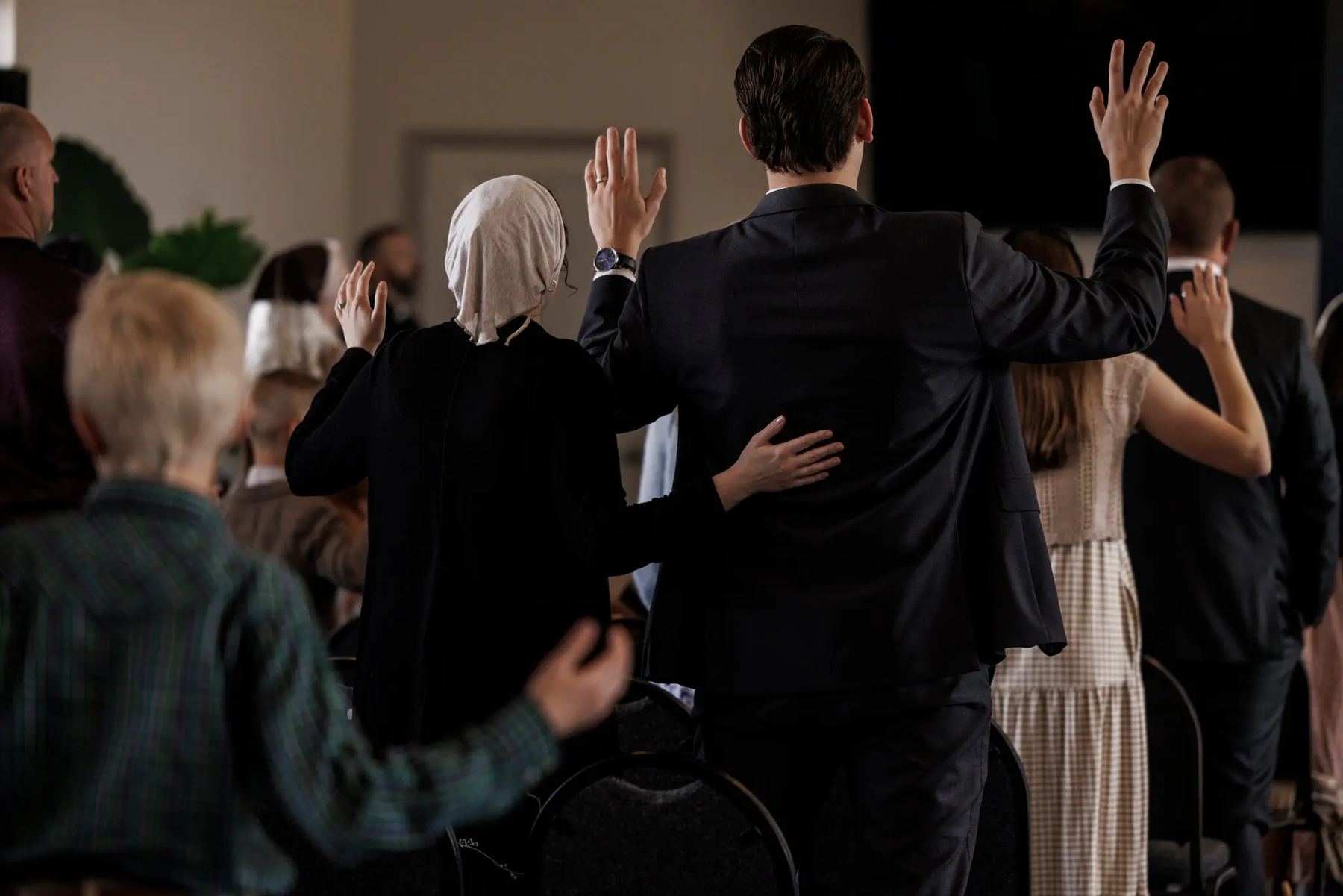
Prescott, Arizona
King’s Way Reformed Church
Dale serves as the Teaching Pastor of King’s Way, a Reformed church in the Anglican tradition — proclaiming Christ in Prescott through historic liturgy, hymns, verse-by-verse preaching, and the Lord’s Supper each week. Children worship beside their parents.
Reformed in the Anglican tradition
The English Reformation gave the church a confession, a liturgy, and a pattern of common prayer that shaped Christian nations for centuries. King’s Way receives that inheritance gladly: Reformed in doctrine, Anglican in worship, catholic in its creeds, and evangelical in its proclamation of justification by faith in Christ alone.
What our church believes-
I
The Scriptures
Supreme — the only infallible rule of faith and life.
-
II
The Creeds
Faithful summaries — Apostles’, Nicene, and Athanasian.
-
III
The Articles
Our confession — the Thirty-Nine Articles of Religion.
-
IV
The Prayer Book
Our rule of worship — the Book of Common Prayer.
The Great Cloud of Witnesses
Sources of Inspiration
Preachers, Puritans, generals, and founders — the men whose faith, courage, and convictions have formed Dale’s ministry.
-

Thomas Watson
c. 1620–1686
Puritan pastor & author of A Body of Divinity
-

J. C. Ryle
1816–1900
First Bishop of Liverpool & evangelical Anglican
-

George Whitefield
1714–1770
Anglican evangelist of the Great Awakening
-

Charles Spurgeon
1834–1892
The Prince of Preachers
-

George Washington
1732–1799
Commander-in-Chief & first President
-

Stonewall Jackson
1824–1863
General & devout Presbyterian deacon
-

C. S. Lewis
1898–1963
Anglican scholar, apologist & author
On Dale's Shelf
- Favorite Fiction
- The Count of Monte Cristo Alexandre Dumas
- Favorite Books of the Bible
- Romans & John The gospel explained and the gospel embodied
Books
Books by Dale Partridge
Theology, family, manhood, and the church — written for ordinary Christians who want to think biblically.
Shop all books-
 Coming Soon
 19 Reasons to Repeal the 19th Amendment
Coming soon
-
 Coming Soon
 God’s Design for Nations
A Biblical Introduction to Race, Ethnicity, and Christian Nationalism
Coming soon
-
 New
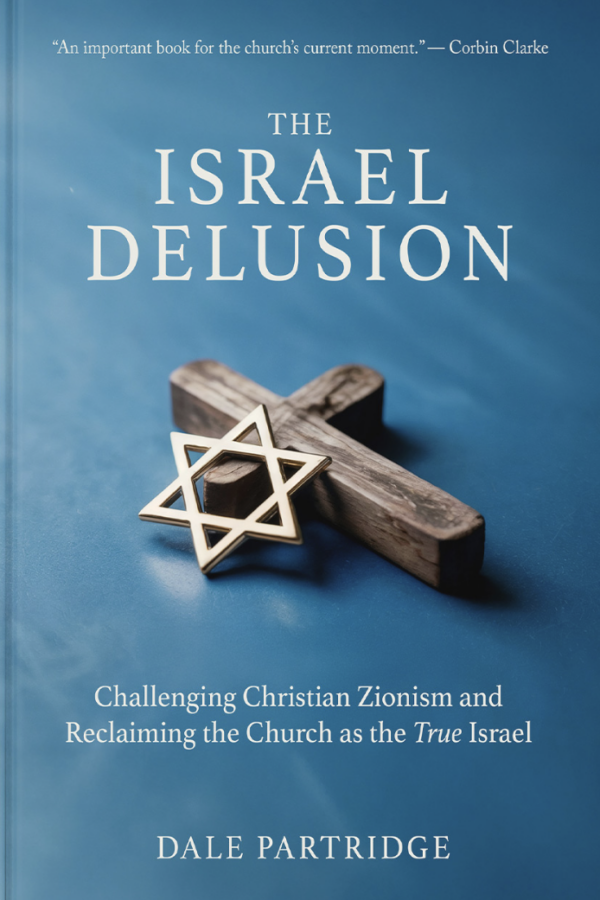
New The Israel Delusion
Challenging Christian Zionism and Reclaiming the Church as the True Israel
Get the book
-
 New
New Reformed Versus Rome
Why Classical Protestantism Is the Recovery of the Historic Christian Church
Get the book
-

The Manliness of Christ
How the Masculinity of Jesus Eradicates Effeminate Christianity
2022 Get the book
-

A Cover for Glory
A Biblical Defense for Headcoverings
2023 Get the book
-

The Ground of Good Theology
A Beginner’s Guide for the Faithful Study of God
2022 Get the book
-
Memoir
In the Light
My Story, My Failures, His Grace
Get the book
-
 Children’s
 Simple Theology
A Gospel Catechism for Kids
Get the book
-

Glory to the Newborn King
Why Celebrating Christmas Is Good for Families, Churches, and Cities
Get the book
Documentary
Photo Credit: The New York Times
Featured in the Documentary
What Is Christian Nationalism?
A feature documentary that sits down with the pastors at the center of today’s debate — Dale Partridge, Joel Webbon, Andrew Isker, and Joshua Haymes — to ask what Christian Nationalism really means, in their own words.
Watch the filmInvite Dale
Speaking & Media Requests
Dale speaks at conferences, churches, colleges, and civic gatherings, and joins podcasts, broadcasts, and print interviews. Share a few details and our team will be in touch.
Frequent topics
- Reformed Theology
- Biblical Patriarchy
- Christian Nationalism
- Feminism & the 19th Amendment
- Biblical Foreign Policy & Immigration
- A Theology of Race & Ethnicity
Follow
Join the conversation